
DEVOTIONALS
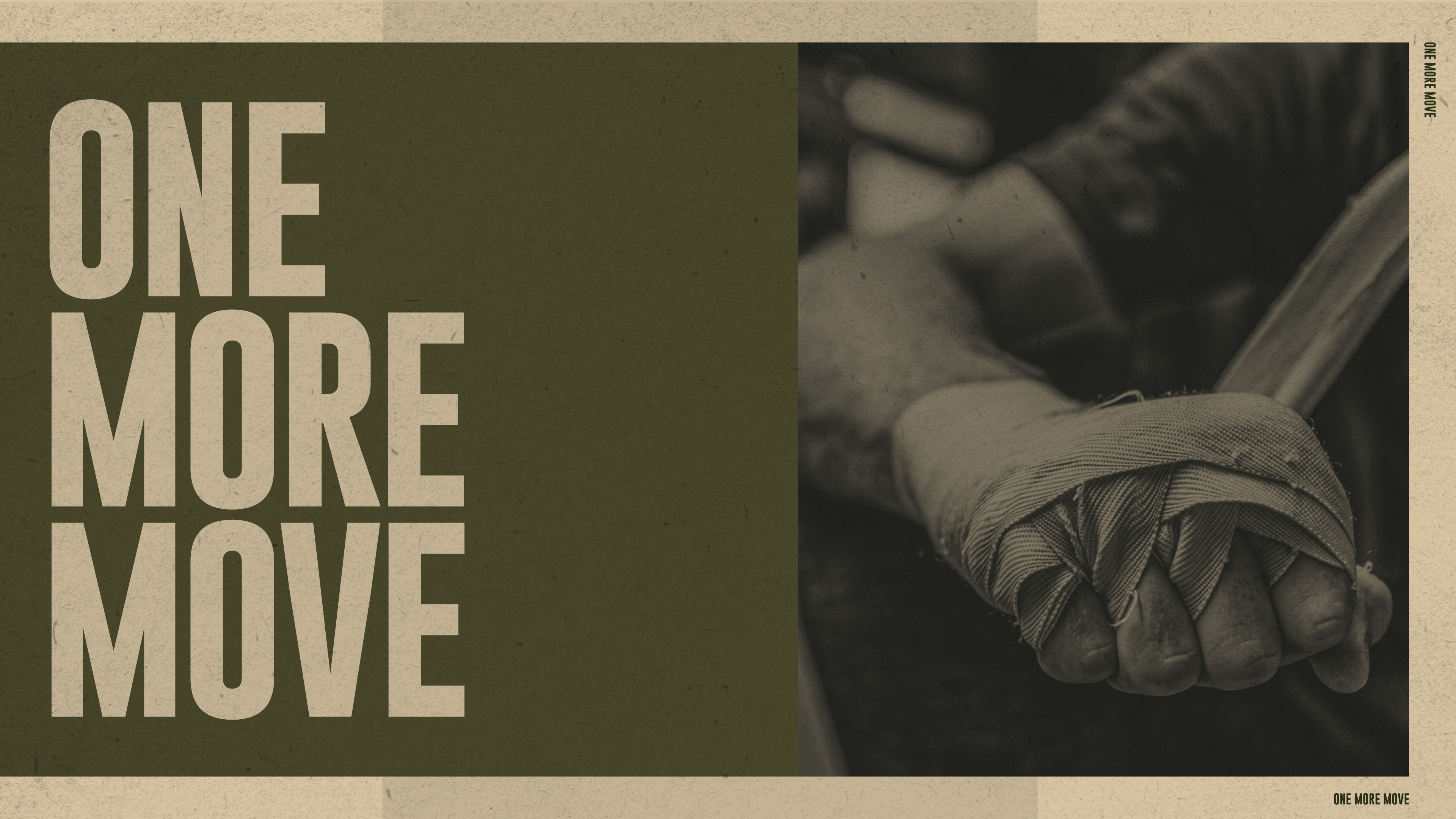
One More Move Devotional
A 5 Day Devotional from Pastor Kyle
Unexpected battles can shake our sense of control, but they can also deepen our trust in God. Over the next five days, you’ll walk through a biblical battle plan drawn from Jehoshaphat’s story—learning how to seek God first, face what’s in front of you, and watch the Lord fight in ways you could never manufacture. Each day builds toward making “one more move” of faith when you feel like you have none left.
Day 1
2 Chronicles 20:3-4
Battles often arrive without permission, and the shock of them can tempt you to react with panic, urgency, or self-reliance. Jehoshaphat was “alarmed,” but instead of letting fear become his leader, he “resolved to inquire of the Lord.” That word resolved matters—he made a deliberate decision about where his first move would be: not toward the problem, but toward God.
Seeking God first didn’t mean Judah ignored reality; it meant they refused to let reality define God. They fasted, gathered, and asked for help together. When a battle chooses you, your most important choice is who you’ll consult first, what voice will be loudest, and what practices will anchor your heart before you take any next step.
- What battle (visible or invisible) has “shown up” in your life recently without warning? Name it honestly.
- When you feel alarmed, what is your default first move—problem-solving, spiraling, avoiding, or praying?
- What would it look like for you to “resolve to inquire of the Lord” today in a specific, scheduled way?
- Is there a trusted person or community you need to invite into seeking God with you rather than carrying this alone?
- Choose one concrete act of dependence today (a short fast from something, a focused prayer time, or a written surrender) and do it before you take another action.
Day 2
2 Chronicles 20:6-9
Jehoshaphat’s prayer begins with who God is, not with how big the enemy is. He anchors Judah in God’s sovereignty: God rules, God has power, and no one can withstand Him. In a crisis, you may not be able to control outcomes, but you can control where you set your attention—on the size of the threat or the greatness of the Lord.
Then he remembers what God has done. He rehearses God’s past faithfulness to shape present faith. This is how you fight discouragement: you preach to your own soul with testimony. When you don’t know what God is doing, you can still cling to what God has done, and let that history with God steady your next “one more move.”
- What is one true statement about God (His character or promises) that your battle is trying to make you forget?
- Write a short “Jehoshaphat-style” prayer that starts with who God is before you mention what you need.
- List three moments—big or small—when God has already carried you, provided, or guided you.
- Where have you been interpreting God through your circumstances instead of interpreting your circumstances through God?
- Share one testimony of God’s faithfulness with someone this week (a friend, family member, or small group) to strengthen both of you.
Day 3
2 Chronicles 20:15-17
God’s word to Judah is both comforting and challenging: “Do not be afraid… for the battle is not yours, but God’s.” Notice the paradox—God says He will fight, yet He still commands them to march, take their positions, and stand firm. Trust isn’t passivity; it’s obedience without striving to be your own savior.
Many of us say “the battle is the Lord’s” while living as if the outcome depends entirely on our anxiety, hustle, or control. The invitation is to face what’s real while releasing what’s not ours to carry. Your assignment is faithfulness—show up, do what God asks, and leave the results in His hands. That is your “one more move”: step forward without trying to do God’s job.
- In your current battle, what part belongs to God alone (what you cannot control), and what part is your faithful obedience?
- What is one “position” God may be asking you to take—one step of integrity, one hard conversation, one appointment, one boundary, one act of repentance?
- Where have you been trying to defeat something in your own strength that God is asking you to surrender?
- What would “stand firm” look like for you this week when emotions surge—what practice will keep you steady?
- Pray a simple release: “Lord, I will face this, but I will not carry it alone. Fight for me as I obey You.” Then take one step you’ve been avoiding.
Day 4
2 Chronicles 20:20-21
Before the victory ever appears, Jehoshaphat calls the people to faith: “Have faith in the Lord your God and you will be upheld.” Then they do something that makes no sense to fear—they put worshipers at the front. Praise becomes their posture, not because the battle is easy, but because God is worthy and present.
Worship doesn’t deny the threat; it dethrones it. When gratitude and praise lead, anxiety loses its leadership position. The song on your lips can become the steering wheel of your mind—directing your thoughts back to God’s enduring love. Sometimes your “one more move” is not a new strategy, but a new sound: thanksgiving before you see the turnaround.
- What tends to lead your “army” (your thoughts and choices) when pressure hits—fear, control, people-pleasing, or worship?
- What is one specific attribute of God you can praise today (faithful, near, powerful, wise, compassionate)?
- Create a short gratitude list of five things, including at least one thing that is true even in the middle of your battle.
- How could you put worship “out front” practically—music, Scripture reading, spoken thanks, or prayer before checking messages/news?
- Choose one phrase to repeat this week when fear rises (e.g., “His love endures forever,” or “The battle is the Lord’s”) and use it as a cue to pray.
Day 5
2 Chronicles 20:22
“As they began to sing and praise, the Lord set ambushes.” The turning point is striking: God moved while His people worshiped. Judah didn’t manufacture the victory; they participated through faith-filled obedience. This is a picture of spiritual warfare—God works in ways you cannot predict, but He calls you into alignment with His presence and His promises.
This doesn’t mean every battle ends instantly or exactly how you prefer, but it does mean you are never fighting alone. God’s deliverance often arrives as you keep moving forward in faith—seeking Him, remembering His faithfulness, standing your ground, and worshiping before you see the result. Your “one more move” today is to keep showing up with trust, believing that God is already at work beyond what you can see.
- Where have you already seen small signs of God’s help, protection, or guidance in this season, even if the battle isn’t over?
- What would it look like to measure faithfulness this week (obedience and trust) rather than only measuring outcomes?
- Is there a step you need to take to stay in the fight with God—consistent prayer, counseling, confessing sin, making amends, or asking for help?
- How can you prepare to give God credit when the breakthrough comes, instead of taking the weight or the glory yourself?
- Write a brief commitment statement: “Lord, my one more move is __________,” and share it with someone who can encourage you to follow through.


